Comparing Portable Power Stations for Camping
Keep your devices charged with portable power stations for camping. Compare capacity, output ports, and charging methods for reliable power.
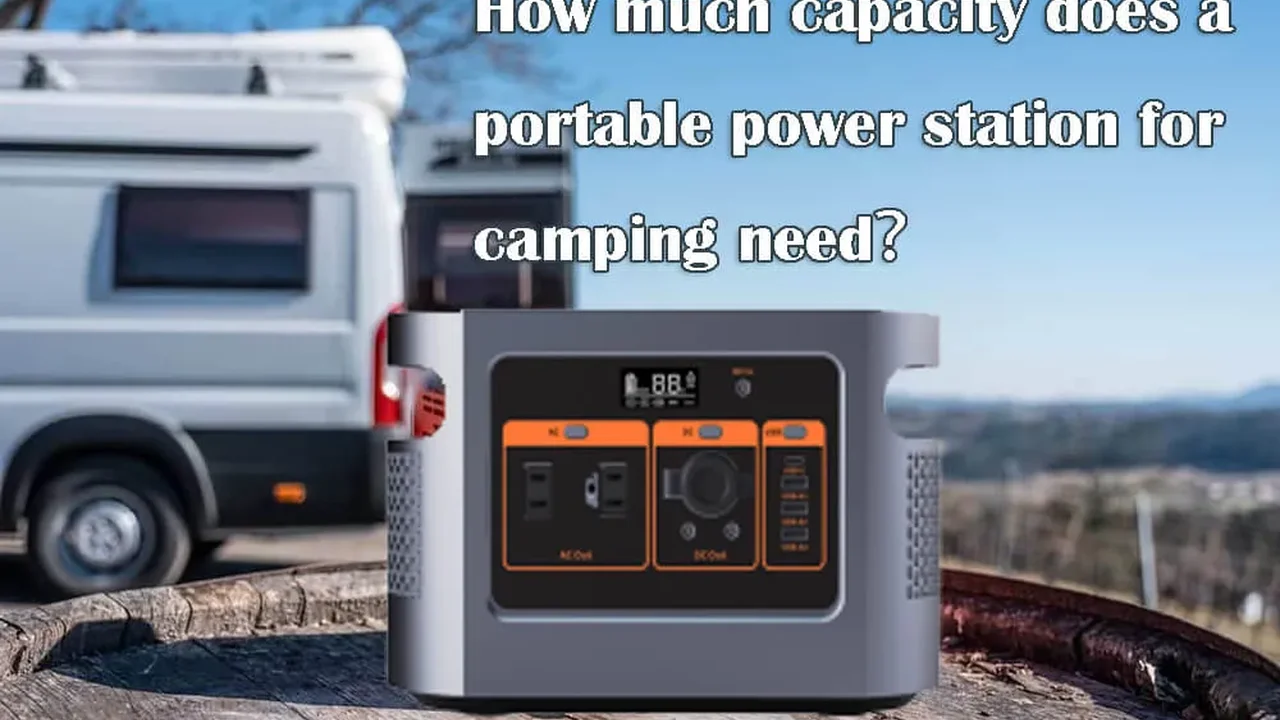
Keep your devices charged with portable power stations for camping. Compare capacity, output ports, and charging methods for reliable power.
Comparing Portable Power Stations for Camping
Hey there, fellow outdoor enthusiasts! Ever found yourself deep in the wilderness, miles away from the nearest outlet, only to realize your phone's about to die, or your drone battery is critically low? Or maybe you're just trying to enjoy a quiet evening at the campsite with some string lights and a movie on your tablet. That's where portable power stations come in – they're absolute game-changers for modern camping. Forget those noisy, smelly gas generators; we're talking clean, quiet, and efficient power on the go. But with so many options out there, how do you pick the right one? Let's dive deep into comparing portable power stations for camping, looking at everything from capacity to charging methods, and even some specific product recommendations.
Understanding Portable Power Station Basics: Capacity and Output
When you're looking at portable power stations, two of the most important specs you'll encounter are capacity and output. Think of capacity like the size of your fuel tank, measured in Watt-hours (Wh) or milliamp-hours (mAh). The higher the Wh, the more power it can store, and the longer it can run your devices. Output, on the other hand, is how much power it can deliver at any given moment, measured in Watts (W). This determines what kind of devices you can run. A small power station might only handle charging phones and laptops, while a larger one could power a mini-fridge or even a small coffee maker.
Watt-hours (Wh) Explained: How Much Juice Do You Need?
Let's break down Wh. If a power station has a 500Wh capacity, it means it can supply 500 watts for one hour, or 100 watts for five hours, and so on. To figure out what capacity you need, list all the devices you plan to power and their wattage. For example, a smartphone might draw 10W, a laptop 60W, and a portable cooler 40W. Then, estimate how long you'll need to run each. If you want to charge your 10W phone 5 times (assuming a 10Wh charge per time), that's 50Wh. If you want to run a 40W cooler for 10 hours, that's 400Wh. Add it all up, and give yourself some buffer. For a weekend trip with basic electronics, 300-500Wh might be enough. For longer trips or powering larger appliances, you'll want 1000Wh or more.
Output Ports and Types: Connecting Your Gear
Portable power stations come with a variety of output ports to connect your gadgets. You'll typically find AC outlets (just like the ones in your house), USB-A ports (for older phones and accessories), USB-C ports (for newer phones, laptops, and fast charging), and 12V DC car ports. Some even have wireless charging pads. Make sure the power station you choose has the right mix of ports for all your devices. Also, pay attention to the maximum wattage output for each port. A USB-C port might offer 100W Power Delivery (PD), which is great for fast-charging laptops, while a standard USB-A might only be 12W.
Charging Methods: Keeping Your Power Station Juiced Up
What's the point of a power station if you can't recharge it? Most portable power stations offer multiple ways to top up their batteries, giving you flexibility whether you're at home or off-grid.
Wall Charging: The Fastest Way to Recharge
This is usually the fastest and most straightforward way to charge your power station. Just plug it into a standard wall outlet using the included AC adapter. Charging times vary wildly depending on the power station's capacity and its charging input wattage. A smaller unit might fully charge in a few hours, while a large one could take 8-10 hours or more. Some newer models feature fast-charging technology that can get them to 80% in under an hour.
Solar Charging: Harnessing the Sun's Power
For true off-grid adventures, solar charging is a must. Most portable power stations are compatible with solar panels (often sold separately). You simply connect the solar panel to the power station, position it in direct sunlight, and let the sun do the work. Solar charging speeds depend on the wattage of your solar panel, the amount of sunlight, and the efficiency of the power station's MPPT (Maximum Power Point Tracking) controller. While slower than wall charging, it's an eco-friendly and sustainable way to keep your devices powered indefinitely in sunny conditions.
Car Charging: On-the-Go Recharging
Many power stations can also be charged via your car's 12V cigarette lighter port. This is super convenient for topping up your power station while you're driving between campsites or on a long road trip. Keep in mind that car charging is generally slower than wall or even solar charging, but it's a great option when you're on the move.
Key Features to Consider: Beyond the Basics
Once you've got a handle on capacity, output, and charging, there are a few other features that can make a big difference in your camping experience.
Portability and Size: How Easy Is It to Carry?
This is camping gear, after all! Consider the weight and dimensions of the power station. If you're backpacking, you'll want something lightweight and compact. For car camping or RV trips, a heavier, larger unit might be acceptable since you won't be carrying it far. Look for ergonomic handles or even wheels on larger models.
Battery Type: LiFePO4 vs. Lithium-ion
Most portable power stations use either Lithium-ion (Li-ion) or Lithium Iron Phosphate (LiFePO4) batteries. Li-ion batteries are common, offer good energy density, and are generally lighter. However, LiFePO4 batteries are gaining popularity because they offer a significantly longer lifespan (more charge cycles), are more stable, and are safer. While LiFePO4 units might be a bit heavier and more expensive upfront, their longevity often makes them a better long-term investment.
Safety Features: Protecting Your Gear and Yourself
Good power stations come with built-in safety features like overcharge protection, over-discharge protection, over-current protection, short-circuit protection, and temperature control. These are crucial for protecting both the power station itself and your connected devices. Always choose a reputable brand that prioritizes safety.
Display and User Interface: Easy to Read and Use
A clear, easy-to-read display is a huge plus. It should show you the remaining battery percentage, input wattage (how fast it's charging), and output wattage (how much power your devices are drawing). Some models even have companion apps that allow you to monitor and control the power station from your smartphone via Bluetooth or Wi-Fi.
Built-in Lights and Other Extras: Handy Add-ons
Many power stations include a built-in LED light, which can be super handy for illuminating your tent or campsite at night. Some even have SOS modes for emergencies. Other extras might include jump-starter capabilities for your car, or even built-in air compressors for inflating tires or air mattresses.
Product Recommendations: Top Portable Power Stations for Camping
Alright, let's get to some specific recommendations. I've picked a few popular and highly-rated models that cover different needs and budgets. Remember, prices can fluctuate, so always check current listings.
1. Jackery Explorer 500: The Reliable Mid-Ranger
The Jackery Explorer 500 is a fantastic all-around choice for most campers. It strikes a great balance between capacity, portability, and price. It's known for its reliability and ease of use.
- Capacity: 518Wh
- Output: 500W (1000W peak) AC output, multiple USB-A and 12V DC ports.
- Charging Methods: Wall, car, and solar (compatible with Jackery SolarSaga panels).
- Battery Type: Lithium-ion.
- Portability: Weighs about 13.3 lbs (6 kg), with a sturdy handle. Easy to carry for car camping or short trips.
- Use Case: Perfect for powering laptops, cameras, drones, small portable fridges (for a few hours), and charging multiple phones/tablets over a weekend. It can run a 40W portable cooler for about 10-12 hours.
- Pros: Very user-friendly, reliable, good build quality, excellent customer support.
- Cons: Lithium-ion battery has fewer charge cycles than LiFePO4, AC output might be limiting for high-wattage appliances.
- Estimated Price: $499 - $549 USD
2. Goal Zero Yeti 1000 Core: The Versatile Workhorse
Goal Zero is another big name in portable power, and the Yeti 1000 Core is a robust option for those who need more power and versatility. It's designed to be a central power hub for longer trips or more demanding setups.
- Capacity: 983Wh
- Output: 1200W (2400W peak) AC output, multiple USB-A, USB-C (60W PD), and 12V DC ports.
- Charging Methods: Wall, car, and solar (compatible with Goal Zero Boulder or Nomad panels).
- Battery Type: Lithium-ion.
- Portability: Weighs around 28.7 lbs (13 kg). It's heavier, so best for car camping, RVs, or base camps.
- Use Case: Can power larger appliances like blenders, small microwaves (briefly), electric grills, and run portable fridges for extended periods (e.g., a 40W cooler for 20-24 hours). Great for powering a full campsite setup.
- Pros: High AC output, good port selection, robust build, integrates well with Goal Zero's ecosystem of solar panels and accessories.
- Cons: Heavier and more expensive, still Lithium-ion battery.
- Estimated Price: $999 - $1099 USD
3. EcoFlow RIVER 2 Pro: The Fast-Charging Champion
EcoFlow has made a name for itself with incredibly fast charging speeds and innovative features. The RIVER 2 Pro is a fantastic option if you prioritize quick recharges and a long-lasting battery.
- Capacity: 768Wh
- Output: 800W (1600W peak) AC output, multiple USB-A, USB-C (100W PD), and 12V DC ports.
- Charging Methods: Wall (charges 0-100% in just 70 minutes!), car, and solar.
- Battery Type: LiFePO4 (Lithium Iron Phosphate). This is a huge plus for longevity.
- Portability: Weighs about 17.2 lbs (7.8 kg). Manageable for car camping.
- Use Case: Excellent for powering most camping appliances, including small heaters, electric kettles (briefly), and running a 40W cooler for about 15-18 hours. The fast charging means you can quickly top it up during a short stop.
- Pros: Incredibly fast AC charging, long-lasting LiFePO4 battery (3000+ cycles), X-Boost feature allows it to power higher wattage appliances than its rated output, smart app control.
- Cons: Slightly higher price point than some competitors for similar capacity.
- Estimated Price: $699 - $749 USD
4. BLUETTI EB3A: The Compact and Budget-Friendly Option
If you're looking for something smaller, lighter, and more budget-friendly for shorter trips or just charging essentials, the BLUETTI EB3A is a strong contender. It packs a surprising punch for its size.
- Capacity: 268Wh
- Output: 600W (1200W peak) AC output, multiple USB-A, USB-C (100W PD), and 12V DC ports.
- Charging Methods: Wall (charges 0-80% in 30 minutes!), car, and solar.
- Battery Type: LiFePO4.
- Portability: Super lightweight at just 10 lbs (4.6 kg). Very easy to carry.
- Use Case: Ideal for charging phones (20+ times), laptops (3-4 times), running a small fan, or powering LED lights for days. Not suitable for high-wattage appliances like coolers for extended periods, but great for keeping your essential electronics alive.
- Pros: Extremely portable, very fast charging, durable LiFePO4 battery, excellent value for money.
- Cons: Limited capacity for larger power needs, smaller number of AC outlets.
- Estimated Price: $249 - $299 USD
Real-World Scenarios: Picking the Right Power Station for Your Adventure
Let's put these power stations into some common camping scenarios to help you visualize which one might be best for you.
Weekend Car Camping with Family: Powering Comfort
For a typical weekend car camping trip where you want to keep phones charged, run a portable fan at night, inflate an air mattress, and maybe power some string lights, the Jackery Explorer 500 or EcoFlow RIVER 2 Pro would be excellent choices. The Jackery offers simplicity and reliability, while the EcoFlow gives you faster charging and a longer-lasting battery. Both have enough capacity to handle these needs for 2-3 days without needing a recharge, especially if you're mindful of your power consumption.
Extended Off-Grid Expedition: Sustained Power
If you're planning a week-long off-grid adventure, perhaps with a portable fridge, a drone, and multiple laptops, you'll need something with serious capacity and the ability to recharge via solar. The Goal Zero Yeti 1000 Core is a strong contender here due to its high capacity and robust output. Pair it with a good solar panel (like Goal Zero's Boulder 100 or 200) and you can stay powered indefinitely as long as the sun shines. The EcoFlow RIVER 2 Pro, with its LiFePO4 battery and fast solar charging capabilities, also becomes a very attractive option for extended trips, especially if you can get a good solar panel to match its input.
Backpacking or Minimalist Camping: Lightweight Essentials
For backpackers or those who prioritize extreme portability, a large power station just isn't practical. You're likely only looking to charge your phone, headlamp, and maybe a small GPS device. In this case, the BLUETTI EB3A is a fantastic choice. It's light enough to carry, offers fast charging, and uses the durable LiFePO4 battery. While its capacity is limited, it's perfect for keeping your essential communication and navigation devices alive for several days.
RV or Van Life: Home Away From Home Power
For RVers or van lifers who need to power more substantial appliances like mini-fridges, small microwaves, or even CPAP machines overnight, you'll want something with even higher capacity and continuous output. While not explicitly listed above, brands like EcoFlow (Delta series) and BLUETTI (AC series) offer power stations in the 1000Wh to 2000Wh+ range that are specifically designed for these heavier loads. These often feature multiple AC outlets and robust charging options, including direct solar input for larger arrays. For example, an EcoFlow Delta 2 (1024Wh) or BLUETTI AC200P (2000Wh) would be more suitable for this kind of usage, allowing you to run a 40W cooler for 20-50 hours depending on the model, plus other appliances.
Maintenance and Longevity: Making Your Investment Last
Once you've invested in a portable power station, you'll want to make sure it lasts. Here are a few tips:
- Store it Properly: If you're not using it for a while, store your power station in a cool, dry place, ideally with the battery charged to around 50-80%. Avoid extreme temperatures.
- Cycle the Battery: For Lithium-ion batteries, it's good practice to fully discharge and then fully recharge the unit every few months to help calibrate the battery management system. LiFePO4 batteries are more robust and don't require this as often.
- Keep it Clean: Wipe down the exterior regularly and ensure the vents are clear of dust and debris to prevent overheating.
- Don't Overload: Always stay within the power station's rated output. Trying to draw too much power can trigger safety shutdowns or even damage the unit.
- Use Quality Cables: Always use the charging cables and adapters provided by the manufacturer, or high-quality replacements, to ensure efficient and safe charging.
Choosing the right portable power station for your camping adventures really comes down to understanding your specific power needs, how long you'll be off-grid, and what your budget looks like. Whether you're just charging a phone or running a full outdoor kitchen, there's a power station out there that's perfect for you. Happy camping, and stay powered up!
:max_bytes(150000):strip_icc()/277019-baked-pork-chops-with-cream-of-mushroom-soup-DDMFS-beauty-4x3-BG-7505-5762b731cf30447d9cbbbbbf387beafa.jpg)