Essential Climbing Backpacks for Gear Hauling
Carry your gear efficiently with essential climbing backpacks. Review capacity, access points, and durability for multi-pitch and alpine climbs.
Carry your gear efficiently with essential climbing backpacks. Review capacity, access points, and durability for multi-pitch and alpine climbs.
Essential Climbing Backpacks for Gear Hauling
Why a Dedicated Climbing Backpack Matters
When you're heading out for a day at the crag, a multi-pitch ascent, or even a full-blown alpine expedition, your backpack isn't just a bag; it's a critical piece of gear. Unlike a regular hiking pack, a climbing backpack is specifically designed to handle the unique demands of the vertical world. This means features like durable materials that can withstand abrasion against rock, streamlined designs that won't snag on ropes or pro, and specialized carrying systems for ropes, ice axes, and helmets. Trying to make do with a standard hiking pack often leads to frustration, discomfort, and even safety issues. A dedicated climbing pack ensures your gear is organized, accessible, and protected, allowing you to focus on the climb itself.
Think about it: you're often carrying heavy, oddly shaped items like ropes, quickdraws, cams, and a rack of nuts. A well-designed climbing pack distributes this weight effectively, preventing strain on your back and shoulders. It also provides quick access to essentials, so you're not fumbling around when you need that specific piece of gear. Plus, the robust construction means it can take a beating, which is inevitable when you're hauling it up a chimney or dragging it across a granite slab. Investing in the right climbing backpack is an investment in your comfort, efficiency, and overall climbing experience.
Key Features to Look for in Climbing Backpacks
Climbing Backpack Capacity and Size Considerations
The size of your climbing backpack is perhaps the most crucial decision, directly tied to the type of climbing you do. For a quick gym session or a single-pitch crag day, a smaller pack (15-25 liters) might suffice, just enough for your shoes, harness, chalk bag, and a few quickdraws. However, for a full day of sport climbing or a multi-pitch route, you'll likely need something in the 30-45 liter range to accommodate a rope, full rack, water, food, and extra layers. Alpine climbing or multi-day expeditions demand even larger packs, often 50 liters or more, to carry sleeping bags, tents, cooking gear, and more extensive safety equipment.
Consider the volume in liters, but also think about the pack's dimensions. A tall, narrow pack might be great for squeezing through tight spots on a climb, while a wider, shorter pack might offer better stability for heavy loads. Always try on a pack with some weight in it to get a real feel for how it distributes the load and moves with your body.
Climbing Backpack Durability and Material Selection
Climbing packs take a beating. They're dragged, scraped, and stuffed into cracks. Therefore, durability is paramount. Look for packs made from robust materials like high-denier nylon (e.g., 420D, 630D, or even 840D) or Dyneema. These fabrics offer excellent abrasion resistance and tear strength. Reinforced stress points, double-stitched seams, and burly zippers are also indicators of a well-built pack. Some packs feature a combination of materials, with tougher fabrics in high-wear areas and lighter ones elsewhere to save weight. Water resistance is also a plus, especially for alpine environments or unexpected rain showers. While not fully waterproof like a dry bag, a good DWR (Durable Water Repellent) coating and taped seams can go a long way in keeping your gear dry.
Climbing Backpack Access Points and Organization
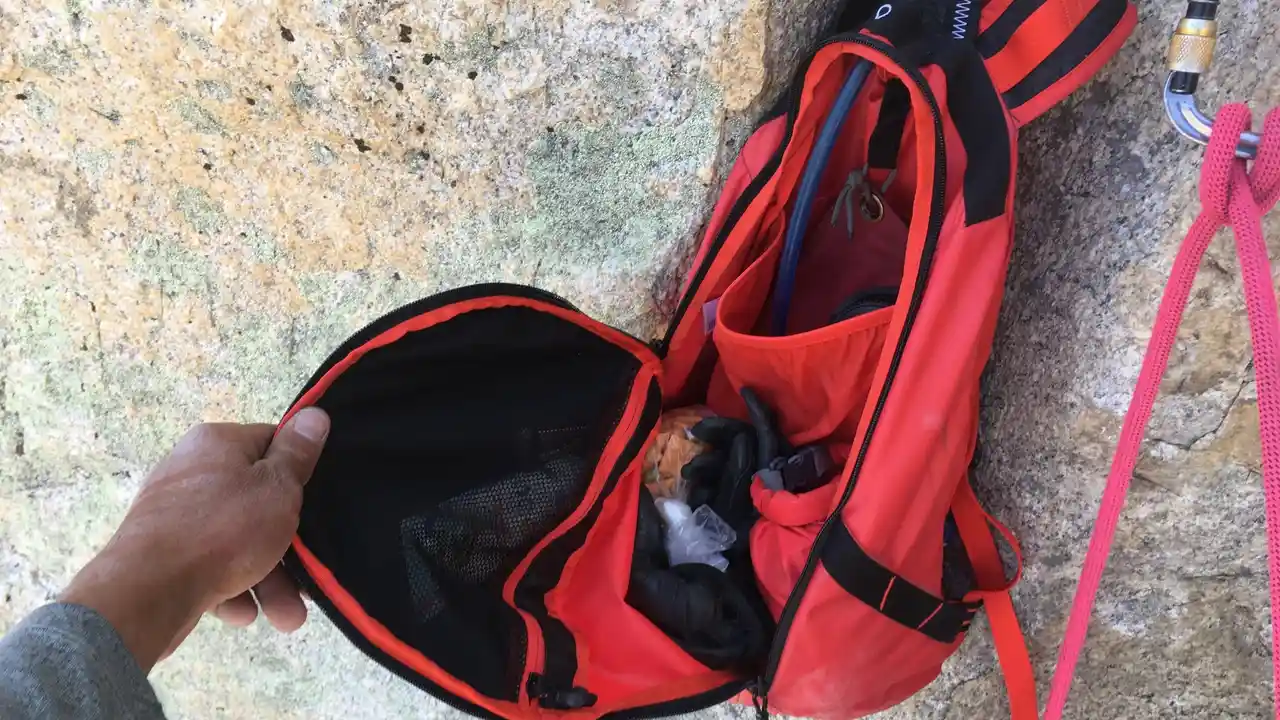
Efficient access to your gear can make or break a climbing day. Top-loading packs are common, often with a drawstring closure and a floating lid that can expand to accommodate more gear or be removed entirely. Some packs offer full-length side zippers or back panel access, allowing you to get to items at the bottom of your pack without unpacking everything. This is incredibly useful when you're on a ledge and need a specific piece of gear quickly. Internal organization is usually minimal in climbing packs to maximize usable space, but some might have a small zippered pocket for valuables or a hydration sleeve. External attachment points for ropes, ice axes, helmets, and crampons are essential, keeping bulky or sharp items outside the main compartment.
Climbing Backpack Carrying Systems and Comfort
Even with a heavy load, a good climbing pack should be comfortable. Look for well-padded shoulder straps and a supportive hip belt that can transfer weight effectively to your hips. Many climbing packs feature a removable or minimalist hip belt, which is great for wearing over a harness without interference. The back panel should offer some ventilation, though this is often less of a priority than a close-to-body fit for stability while climbing. Load lifters on the shoulder straps help pull the pack closer to your body, improving balance. Sternum straps are also standard for added stability. For alpine packs, a removable frame sheet or aluminum stay can offer rigidity for heavy loads but can be removed to save weight or make the pack more pliable for climbing.
Top Climbing Backpacks for Different Scenarios
Best All-Around Cragging Backpack: Black Diamond Crag 40
The Black Diamond Crag 40 is a fantastic workhorse for sport climbing and single-pitch trad days. It hits that sweet spot of capacity and features without being overly complicated. Its 40-liter volume is perfect for a full rack, rope, shoes, and personal items. What sets it apart is the full-length zipper access on the back panel, allowing you to lay the pack flat and access everything without digging. This is a game-changer at the base of the crag. It's built with durable 840D nylon, so it can handle being dragged around. The rope strap on top and external helmet carry keep bulky items secure. The simple, comfortable suspension system handles moderate loads well. It retails for around $120-150 USD. It's a no-frills, highly functional pack that just works.
Pros: Excellent full back panel access, very durable, good capacity for day trips, simple and effective design. Cons: Not ideal for very heavy loads or extended approaches, minimal internal organization.
Best Multi-Pitch and Alpine Climbing Pack: Arc'teryx Alpha FL 40
For fast and light alpine ascents or demanding multi-pitch routes, the Arc'teryx Alpha FL 40 is a minimalist masterpiece. FL stands for 'Fast and Light,' and this pack lives up to its name. Weighing in at just over a pound (around 650g), it's incredibly light for its 40-liter capacity. It achieves this by using highly durable and waterproof N400r-AC² nylon 6 ripstop fabric, which is also incredibly weather-resistant. The design is streamlined, with no unnecessary bells and whistles to snag on rock. It features a unique 'drawbridge' opening for quick access and a simple, effective rope and ice axe attachment system. The hip belt is minimalist and designed to be worn over a harness. This pack is for climbers who prioritize speed, efficiency, and weather protection. Expect to pay around $250-300 USD for this premium piece of gear.
Pros: Extremely lightweight, highly weather-resistant, incredibly durable for its weight, streamlined for climbing. Cons: Minimal padding, less comfortable for heavy loads on long approaches, premium price point, limited organization.
Best Value Climbing Pack: Osprey Mutant 38
Osprey is known for its comfortable packs, and the Mutant 38 brings that comfort to the climbing world at a competitive price. This pack is a versatile option for everything from cragging to light alpine missions. Its 38-liter capacity is a good sweet spot, and the pack features a removable top lid, allowing it to be stripped down for lighter loads or more technical climbing. It has excellent ice tool attachments, a rope carry system, and a helmet carry. The back panel is snow-shedding, making it suitable for winter use. The hip belt is designed to be worn with a harness, and the overall suspension system is very comfortable for carrying heavier loads on approaches. It typically retails for around $160-190 USD, offering a great balance of features, comfort, and durability for the price.
Pros: Very comfortable carrying system, versatile for various climbing styles, good feature set for the price, durable construction. Cons: Slightly heavier than some minimalist alpine packs, top-loading only access.
Best Haul Bag for Big Wall Climbing: Metolius Haul Bag (various sizes)
For big wall climbing, a traditional backpack simply won't cut it. You need a haul bag – a cylindrical, incredibly durable bag designed to be dragged up thousands of feet of rock. Metolius is a leader in this category, offering various sizes from the Quarter Dome (25L) to the El Cap (105L). These bags are constructed from super-tough Durathane fabric, which is virtually indestructible. They feature reinforced seams, burly haul points, and often a padded suspension system for carrying on approaches. Internal organization is usually minimal, but some have small pockets. The price varies significantly by size, from around $100 for smaller versions to $300+ for the largest. These are specialized tools for a specialized type of climbing.
Pros: Unmatched durability for hauling, designed specifically for big wall abuse, various sizes available. Cons: Not comfortable for traditional backpacking, very heavy, specialized use.
Best Lightweight Cragging Pack: Patagonia Cragsmith 32L
The Patagonia Cragsmith 32L is another excellent option for cragging, offering a blend of durability and smart access. Similar to the Black Diamond Crag 40, it features a full back panel zipper, allowing easy access to all your gear. This pack is made from a burly 630-denier nylon, ensuring it can stand up to abuse. It's slightly smaller than the Crag 40, making it a bit more streamlined for shorter approaches or lighter loads. It includes internal organization pockets for smaller items and a rope strap. The suspension system is comfortable enough for most cragging approaches. It typically retails for around $130-160 USD.
Pros: Full back panel access, durable construction, good internal organization, comfortable for day trips. Cons: Not ideal for very heavy loads, slightly less capacity than some competitors.
Maintenance and Care for Your Climbing Backpack
Cleaning Your Climbing Backpack for Longevity
Your climbing backpack gets dirty. Really dirty. Dust, chalk, mud, and sweat all accumulate. Regular cleaning is essential for its longevity. First, empty the pack completely and shake out any loose debris. For general cleaning, use a soft brush or cloth and lukewarm water with a mild soap (like dish soap or a specialized gear cleaner). Avoid harsh detergents or bleach, as these can damage the fabric and coatings. Scrub gently, paying attention to dirty spots. Rinse thoroughly to remove all soap residue. For stubborn stains, a little more elbow grease might be needed. Never put your climbing pack in a washing machine or dryer, as this can damage the fabric, coatings, and frame.
Drying and Storing Your Climbing Backpack Properly
After cleaning, or even just after a wet day out, proper drying is crucial to prevent mildew and odors. Hang your pack upside down in a well-ventilated area, out of direct sunlight. Sunlight can degrade fabrics over time. Make sure all pockets are open to allow air circulation. It might take a day or two for the pack to dry completely, especially if it has thick padding. Once thoroughly dry, store your pack in a cool, dry place away from direct sunlight and extreme temperatures. Avoid compressing it for long periods if it has a frame, as this can deform it. Proper storage helps maintain the integrity of the fabric and components, ensuring your pack is ready for your next adventure.
Repairing Minor Damage to Your Climbing Backpack
Climbing packs are tough, but they're not indestructible. Small tears, frayed seams, or broken buckles can happen. Many minor repairs can be done at home. For small tears, a gear repair patch (like those from Tenacious Tape) can provide a quick and durable fix. For larger tears or seam issues, a needle and strong thread (like upholstery thread) can be used for hand-stitching. If a buckle breaks, many outdoor gear shops sell replacement buckles that can be easily swapped out. For more significant damage, or if you're not confident in your repair skills, consider taking your pack to a professional gear repair service. Many outdoor brands also offer repair services for their products. Addressing minor damage promptly can prevent it from becoming a major problem and extend the life of your pack significantly.
The Evolution of Climbing Backpack Design
Historical Overview of Climbing Pack Development
Early climbing packs were often repurposed military rucksacks or simple canvas bags, heavy and uncomfortable. As climbing evolved, so did the gear. In the mid-20th century, internal frame packs began to emerge, offering better load distribution than external frames. Materials like nylon replaced canvas, significantly reducing weight and improving weather resistance. The focus shifted from simply carrying gear to carrying it efficiently and comfortably in challenging terrain. Specialized features like ice axe loops and crampon patches started appearing. The late 20th century saw a boom in technical climbing, leading to more streamlined, minimalist designs for alpine and multi-pitch climbing, prioritizing low weight and snag-free profiles.
Modern Innovations in Climbing Backpack Technology
Today's climbing backpacks benefit from advanced materials and thoughtful design. Ultra-high-molecular-weight polyethylene (UHMWPE) fabrics like Dyneema and Spectra offer incredible strength-to-weight ratios, making packs lighter yet more durable. Laser-cut and welded seams improve weather resistance and reduce bulk. Suspension systems have become more sophisticated, offering better load transfer and ventilation while remaining low-profile. Features like quick-access zippers, removable components (hip belts, frame sheets, lids), and integrated rope/helmet carry systems are now common. Some packs even incorporate RECCO reflectors for avalanche rescue. The trend continues towards lighter, more specialized packs that cater to specific climbing disciplines, from ultralight alpine assaults to burly big wall expeditions, all while maintaining a focus on durability and user-friendliness.
Choosing the Right Climbing Backpack for Your Adventures
Selecting the perfect climbing backpack is a personal decision that depends heavily on your specific climbing objectives. Are you primarily a sport climber hitting local crags? A multi-pitch enthusiast tackling long routes? Or an aspiring alpinist dreaming of high peaks? Each scenario demands different features and capacities. Consider the weight of your typical rack, the length of your approaches, and the weather conditions you'll encounter. Don't be afraid to try on several packs, ideally with some weight in them, to see how they feel on your back. Pay attention to how the pack interacts with your harness and helmet. A well-chosen climbing backpack will not only make your climbing more enjoyable but also safer and more efficient, allowing you to focus on the rock and the movement, not on uncomfortable gear.
:max_bytes(150000):strip_icc()/277019-baked-pork-chops-with-cream-of-mushroom-soup-DDMFS-beauty-4x3-BG-7505-5762b731cf30447d9cbbbbbf387beafa.jpg)