The 3 Best Compact Binoculars for Wildlife Viewing
Spot wildlife with the 3 best compact binoculars. Review magnification, field of view, and portability for nature observation on your hikes.
Spot wildlife with the 3 best compact binoculars. Review magnification, field of view, and portability for nature observation on your hikes.
The 3 Best Compact Binoculars for Wildlife Viewing
There's nothing quite like the thrill of spotting a rare bird, a majestic deer, or a playful squirrel in its natural habitat. Whether you're an avid birdwatcher, a casual hiker, or a dedicated wildlife photographer, having a good pair of binoculars can elevate your outdoor experience from simply observing to truly immersing yourself in the natural world. But with so many options on the market, how do you choose the right pair, especially when portability is key? That's where compact binoculars come in. They offer the perfect balance of optical performance and lightweight design, making them ideal companions for any outdoor adventure where you want to get a closer look without being weighed down.
In this comprehensive guide, we're going to dive deep into the world of compact binoculars specifically tailored for wildlife viewing. We'll explore what makes a great pair, what features to prioritize, and, most importantly, we'll highlight the top three models that consistently impress us with their performance, durability, and value. We'll also discuss real-world scenarios where these binoculars shine, compare their strengths and weaknesses, and give you an idea of what you can expect to pay. So, let's get up close and personal with the best compact binoculars for your next wildlife encounter!
Understanding Compact Binoculars Key Features for Wildlife Observation
Before we jump into specific recommendations, let's break down some of the essential features you should consider when selecting compact binoculars for wildlife viewing. Understanding these terms will help you make an informed decision and ensure you pick a pair that perfectly suits your needs.
Magnification and Objective Lens Diameter What Do the Numbers Mean
Binoculars are typically described by two numbers, for example, 8x25 or 10x32. The first number (8x or 10x) represents the magnification. This tells you how many times closer an object will appear through the binoculars compared to the naked eye. So, an 8x binocular makes an object appear 8 times closer. For wildlife viewing, an 8x or 10x magnification is generally ideal. Higher magnifications can make it difficult to hold the image steady, especially with compact models, leading to shaky views. Lower magnifications offer a wider field of view, which can be beneficial for tracking moving animals.
The second number (25 or 32) refers to the diameter of the objective lens in millimeters. This is the lens at the front of the binoculars that gathers light. A larger objective lens gathers more light, resulting in a brighter image, especially in low-light conditions like dawn or dusk when many animals are most active. However, a larger objective lens also means a larger and heavier binocular. For compact models, objective lens diameters typically range from 20mm to 32mm. A 25mm or 32mm objective lens strikes a good balance between light gathering ability and portability.
Field of View Seeing More of the Wild
The field of view (FOV) refers to the width of the area you can see through the binoculars at a specific distance, usually 1,000 yards or 1,000 meters. It's often expressed in feet or meters. A wider field of view is incredibly useful for wildlife viewing because it makes it easier to locate and track fast-moving animals. Imagine trying to follow a bird in flight with a narrow field of view – it would be like looking through a straw! For compact binoculars, a wider FOV is often a trade-off with higher magnification, so consider your primary use case.
Eye Relief and Eyecups Comfort for All Users
Eye relief is the distance from the eyepiece lens to where your eye needs to be positioned to see the full field of view. This is particularly important for eyeglass wearers. If the eye relief is too short, eyeglass wearers won't be able to see the entire image. Most modern binoculars feature adjustable eyecups that can be twisted up or down to accommodate both eyeglass wearers and those who don't wear glasses. Look for binoculars with at least 15mm of eye relief if you wear glasses.
Prism Type and Coatings Image Quality Matters
There are two main types of prisms used in binoculars: Porro prisms and Roof prisms. Porro prism binoculars are typically wider and have a more traditional shape, offering a slightly better depth perception. Roof prism binoculars are more streamlined and compact, which is why they are more common in compact models. While Porro prisms can sometimes offer a brighter image for their size, modern roof prism binoculars with good coatings can deliver excellent image quality.
Lens coatings are crucial for image brightness, clarity, and color fidelity. Look for binoculars that are 'fully multi-coated' (FMC), meaning all air-to-glass surfaces have multiple layers of anti-reflective coatings. This minimizes light loss and glare, resulting in a brighter, sharper image with truer colors. Some binoculars also feature phase-correction coatings on roof prisms, which further enhance contrast and resolution.
Durability and Weatherproofing Ready for Any Adventure
When you're out in nature, your gear needs to withstand the elements. Look for binoculars that are waterproof and fogproof. Waterproofing is achieved by sealing the optics with O-rings, preventing moisture from entering. Fogproofing involves purging the binoculars with an inert gas like nitrogen or argon, which prevents internal fogging due to rapid temperature changes. A rubber armored body also provides a secure grip and protects the binoculars from minor bumps and drops.
Top 3 Compact Binoculars for Wildlife Viewing Our Picks
Now that we've covered the essential features, let's get to the exciting part: our top three recommendations for compact binoculars that excel in wildlife viewing. Each of these models offers a unique blend of performance, portability, and value, catering to different budgets and preferences.
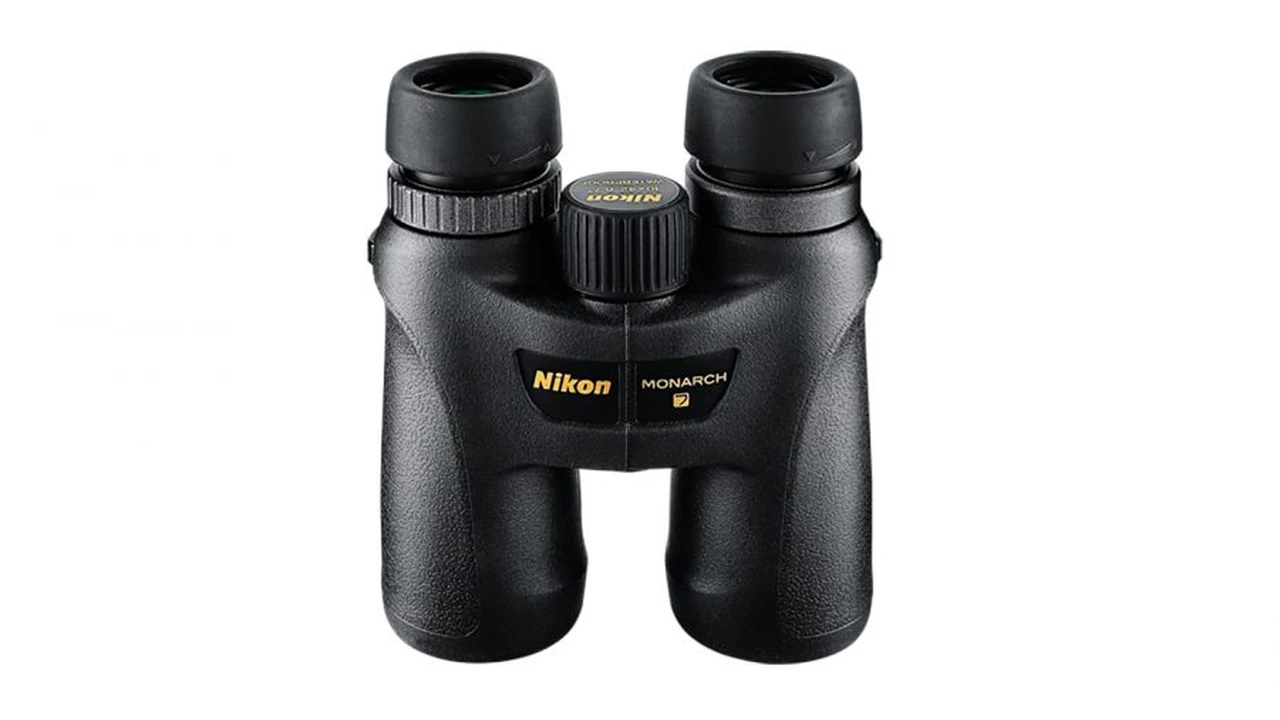
1. Nikon Monarch M5 8x42 The All Round Performer
While the Nikon Monarch M5 8x42 might push the upper limit of what some consider 'compact' due to its 42mm objective lens, its exceptional optical performance and relatively lightweight design make it an absolute standout for serious wildlife enthusiasts. It's a fantastic choice if you prioritize bright, clear images and are willing to carry a slightly larger binocular for superior viewing experience, especially in challenging light conditions.
Why it's Great for Wildlife Viewing
- Superior Brightness and Clarity: The 42mm objective lenses, combined with Nikon's ED (Extra-low Dispersion) glass, deliver incredibly bright, sharp, and color-accurate images. This is crucial for spotting subtle details on animals, even in dim light. You'll notice less chromatic aberration (color fringing) compared to binoculars without ED glass.
- Wide Field of View: With an impressive field of view of 335 feet at 1,000 yards, the Monarch M5 8x42 makes it easy to scan large areas and quickly locate subjects. This is a huge advantage when tracking birds in flight or animals moving through dense foliage.
- Comfortable Eye Relief: At 19.5mm, the eye relief is generous, making it very comfortable for eyeglass wearers to use without vignetting. The multi-click turn-and-slide rubber eyecups allow for precise adjustment.
- Robust and Weatherproof: Fully waterproof and fogproof (nitrogen purged), the Monarch M5 is built to withstand harsh outdoor conditions. The rubber armor provides a secure grip and added protection.
- Excellent Close Focus: A close focus distance of just 8.2 feet allows you to observe nearby insects or birds with impressive detail, adding to its versatility for nature observation.
Ideal Usage Scenarios
The Nikon Monarch M5 8x42 is perfect for:
- Birdwatching in various habitats, from open fields to dense forests.
- Wildlife viewing during dawn and dusk when light is limited.
- Extended observation periods where comfort and image quality are paramount.
- Hunters who need clear, bright views for spotting game.
Comparison and Price
Compared to smaller compact binoculars, the Monarch M5 offers a significant step up in light gathering and image quality. It competes favorably with binoculars in a higher price bracket. You can typically find the Nikon Monarch M5 8x42 for around $250 - $300 USD. This makes it an excellent mid-range option that delivers premium performance without breaking the bank.
2. Celestron Nature DX ED 8x32 The Portable Powerhouse
If true portability is a top priority without sacrificing too much on optical quality, the Celestron Nature DX ED 8x32 is an outstanding choice. It's genuinely compact and lightweight, making it easy to slip into a small backpack or even a large pocket, yet it still incorporates ED glass for a surprisingly clear and vibrant image. This is your go-to binocular for spontaneous wildlife encounters on the go.
Why it's Great for Wildlife Viewing
- Compact and Lightweight: Weighing in at just over a pound, the Nature DX ED 8x32 is incredibly easy to carry all day long. Its smaller form factor makes it less cumbersome than full-sized binoculars.
- ED Glass for Enhanced Clarity: The inclusion of ED glass at this price point is a significant advantage. It helps to reduce chromatic aberration, resulting in sharper images with better color fidelity, which is crucial for identifying subtle markings on birds and animals.
- Good Field of View: With a field of view of 393 feet at 1,000 yards, it offers a wide perspective that aids in quickly acquiring and tracking subjects. This is particularly impressive for a 32mm objective lens binocular.
- Fully Multi-Coated Optics: All air-to-glass surfaces are fully multi-coated, maximizing light transmission and ensuring bright, high-contrast images.
- Waterproof and Fogproof: Like the Monarch M5, the Nature DX ED is nitrogen purged and O-ring sealed, making it ready for any weather conditions you might encounter.
- Excellent Close Focus: A close focus of 6.5 feet is superb for observing butterflies, insects, or birds at very close range.
Ideal Usage Scenarios
The Celestron Nature DX ED 8x32 is ideal for:
- Day hikers and backpackers who want a lightweight binocular for occasional wildlife spotting.
- Travelers who need a compact option that won't take up much space in their luggage.
- Casual birdwatchers who appreciate good optical performance in a portable package.
- Anyone looking for a versatile binocular for general outdoor use.
Comparison and Price
The Celestron Nature DX ED 8x32 offers a fantastic balance of portability and optical quality, especially considering its price. It's a step up from entry-level compact binoculars due to the ED glass. You can typically find the Celestron Nature DX ED 8x32 for around $150 - $200 USD. This makes it an excellent value proposition for those seeking a high-performing compact binocular on a more modest budget.
3. Bushnell H2O 10x25 The Ultra Compact Budget Friendly Option
For those who need the absolute smallest and lightest binocular possible, perhaps for a quick hike, a concert, or just to keep in a glove compartment, the Bushnell H2O 10x25 is a solid contender. While its smaller objective lenses mean it won't perform as well in low light as the other two, its extreme portability and affordability make it a compelling choice for casual observation and bright conditions.
Why it's Great for Wildlife Viewing (with caveats)
- Ultra Compact and Lightweight: This is where the H2O 10x25 truly shines. It's incredibly small and light, making it easy to carry anywhere without noticing the weight. It can easily fit into a jacket pocket.
- 10x Magnification: For its size, 10x magnification offers a good close-up view, allowing you to discern details on distant subjects. However, be aware that 10x in a compact binocular can be harder to hold steady.
- Fully Multi-Coated Optics: Despite its budget-friendly price, the H2O 10x25 features fully multi-coated optics, which helps to maximize light transmission and provide a reasonably bright image for its size.
- Waterproof and Fogproof: A major selling point for a binocular in this price range, the H2O 10x25 is O-ring sealed and nitrogen purged, making it genuinely waterproof and fogproof. This adds significant durability and peace of mind.
- Textured Rubber Armor: The non-slip rubber armor provides a secure grip, even when wet, and offers some protection against minor impacts.
Ideal Usage Scenarios
The Bushnell H2O 10x25 is best suited for:
- Casual observers who want a very portable binocular for bright daylight conditions.
- Travelers with limited space who need a compact option for general sightseeing and occasional wildlife spotting.
- As a backup binocular or for situations where a larger, heavier pair isn't practical.
- Kids or beginners who are just getting into wildlife observation.
Comparison and Price
The Bushnell H2O 10x25 is significantly more compact and affordable than the Nikon Monarch M5 or Celestron Nature DX ED. However, this comes at the cost of lower light gathering capability and a slightly narrower field of view. It's a great entry-level or ultra-portable option. You can typically find the Bushnell H2O 10x25 for around $70 - $100 USD. This makes it an excellent budget-friendly choice for those who prioritize extreme portability and don't need top-tier low-light performance.
Choosing Your Perfect Pair Considerations and Tips
While our top three picks cover a range of needs and budgets, here are some additional considerations and tips to help you make the final decision for your specific wildlife viewing adventures.
Magnification vs Field of View Finding Your Balance
As we discussed, higher magnification often means a narrower field of view. For fast-moving subjects like birds, a wider field of view (e.g., 8x magnification) can be more beneficial for quickly locating and tracking them. If you're primarily observing stationary animals or larger mammals from a distance, a 10x magnification might give you more detail. Consider what type of wildlife you'll be observing most frequently.
Weight and Size How Much Can You Carry
This is perhaps the most critical factor for compact binoculars. If the binoculars are too heavy or bulky, you'll be less likely to bring them along. Think about how you'll be carrying them – around your neck, in a pocket, or in a backpack. The lighter and smaller they are, the more likely they are to be with you when that unexpected wildlife moment happens.
Ergonomics and Grip Comfort in Your Hands
Even compact binoculars should feel comfortable in your hands. Look for models with a good ergonomic design and a textured rubber armor that provides a secure grip, especially if you'll be using them in wet conditions or with gloves. Test them out if possible to see how they feel during extended use.
Focus Mechanism Smooth and Precise Adjustments
A smooth and precise focus wheel is essential for quickly bringing subjects into sharp view. Some binoculars have a fast focus, while others are slower and more precise. For wildlife, a balance is often ideal – fast enough to acquire a moving target, but precise enough to get a crisp image. Also, check the diopter adjustment (usually on the right eyepiece) which allows you to compensate for differences in vision between your eyes.
Accessories What Comes in the Box
Most binoculars come with a neck strap, lens caps, and a carrying case. While these might seem minor, a comfortable neck strap can make a big difference during long hikes. A good quality carrying case will protect your investment. Some higher-end models might include a cleaning cloth or even a harness for more comfortable carrying.
Real World Scenarios Putting Binoculars to the Test
Let's imagine a few scenarios to illustrate how these binoculars might perform:
- Birdwatching in a Forest: You're trying to spot a small warbler flitting through the canopy. The Nikon Monarch M5 8x42, with its superior brightness and wide field of view, would excel here, allowing you to quickly locate the bird and see its subtle plumage details even in dappled light. The Celestron Nature DX ED 8x32 would also perform admirably, offering good clarity in a more portable package. The Bushnell H2O 10x25 might struggle a bit with the lower light and smaller field of view, making it harder to track the fast-moving bird.
- Spotting Deer in an Open Field at Dusk: As the sun sets, light levels drop. The larger objective lenses of the Nikon Monarch M5 8x42 would gather significantly more light, providing a brighter and clearer image of the deer as it emerges from the treeline. The Celestron Nature DX ED 8x32 would still offer a decent view, but the image might be slightly dimmer. The Bushnell H2O 10x25 would likely be quite dim, making it difficult to discern details.
- Hiking a Mountain Trail: You want a lightweight binocular to occasionally scan distant peaks for mountain goats or eagles. The Celestron Nature DX ED 8x32 or even the Bushnell H2O 10x25 would be excellent choices due to their minimal weight and compact size. The Nikon Monarch M5 8x42 might feel a bit heavy for long, strenuous hikes if you're trying to keep your pack weight down.
- Observing Butterflies in a Garden: For close-up observations, the excellent close focus of the Celestron Nature DX ED 8x32 (6.5 feet) and Nikon Monarch M5 8x42 (8.2 feet) would be highly beneficial, allowing you to see intricate details on insects and flowers. The Bushnell H2O 10x25's close focus might be a bit longer, making it less ideal for very close subjects.
Maintenance and Care Keeping Your Binoculars Pristine
To ensure your compact binoculars last for years of wildlife viewing, proper care and maintenance are essential. Here are a few tips:
- Clean Lenses Carefully: Always use a soft lens brush or compressed air to remove loose dust and debris before wiping. Then, use a microfiber lens cloth and a specialized lens cleaning solution (never use harsh chemicals or paper towels) to gently wipe the lenses in a circular motion.
- Store Properly: When not in use, store your binoculars in their protective case to prevent dust accumulation and accidental damage. Avoid storing them in extreme temperatures or high humidity.
- Avoid Drops and Impacts: While many binoculars are rubber armored, they are still precision optical instruments. Try to avoid dropping them or subjecting them to harsh impacts.
- Keep Them Dry: Even if they are waterproof, it's good practice to wipe down your binoculars with a dry cloth after using them in wet conditions before putting them away.
Choosing the best compact binoculars for wildlife viewing comes down to balancing optical performance with portability and your budget. Whether you opt for the bright, clear views of the Nikon Monarch M5, the excellent portability and ED glass of the Celestron Nature DX ED, or the ultra-compact convenience of the Bushnell H2O, any of these choices will significantly enhance your ability to connect with the natural world. So grab your chosen pair, head outdoors, and get ready to discover the hidden wonders of wildlife up close!
:max_bytes(150000):strip_icc()/277019-baked-pork-chops-with-cream-of-mushroom-soup-DDMFS-beauty-4x3-BG-7505-5762b731cf30447d9cbbbbbf387beafa.jpg)