Top Outdoor Watches with Altimeter and Compass
Track your adventures with top outdoor watches featuring altimeter and compass. Explore GPS, battery life, and durability for navigation.
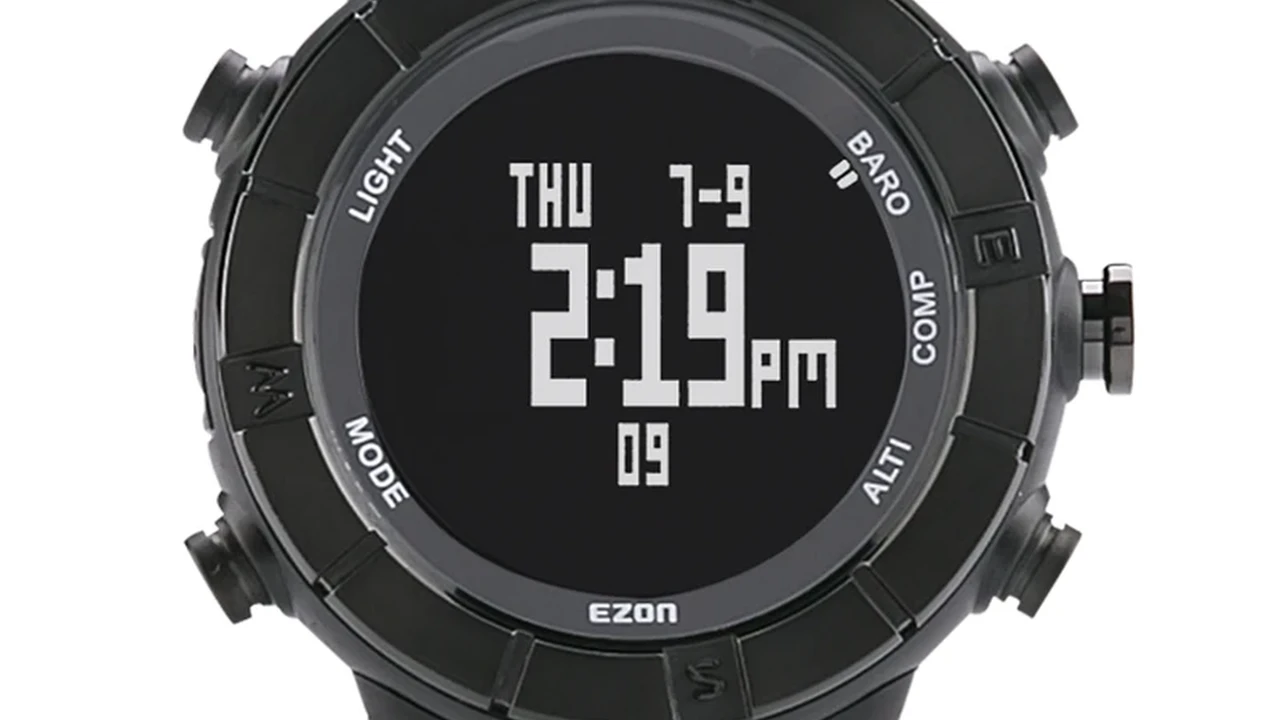
Track your adventures with top outdoor watches featuring altimeter and compass. Explore GPS, battery life, and durability for navigation.
Top Outdoor Watches with Altimeter and Compass
Why an Outdoor Watch is Your Essential Adventure Companion
Hey there, fellow adventurers! Ever found yourself deep in the wilderness, wondering about your exact altitude, or which way is north? That's where a reliable outdoor watch with an altimeter and compass comes in super handy. These aren't just fancy timepieces; they're crucial navigation tools that can seriously enhance your safety and enjoyment on any trail, climb, or expedition. We're talking about devices that pack a ton of tech into a wrist-sized package, giving you real-time data on your elevation, direction, and often much more. Forget fumbling with maps and separate compasses; these watches put all that vital info right on your wrist, making navigation seamless and efficient. Plus, many come with GPS, heart rate monitoring, and even weather alerts, turning them into a true multi-tool for the outdoors.
Understanding Key Features Altimeter, Compass, and GPS Explained
Let's break down what makes these watches so special. When you're looking for an outdoor watch, three features often stand out: the altimeter, the compass, and GPS. Each plays a unique role in helping you navigate and understand your environment.
Altimeter Functionality and Barometric Pressure
The altimeter is your best friend for knowing your vertical position. Most outdoor watches use a barometric altimeter, which measures atmospheric pressure to determine altitude. Why barometric? Because air pressure changes predictably with elevation. As you go higher, the pressure drops. This method is generally very accurate for tracking elevation changes during a hike or climb. However, it's important to remember that weather changes can also affect barometric pressure, so a sudden storm front could make your watch think you've changed altitude even if you haven't. Good watches will allow you to calibrate the altimeter regularly, often using GPS data or a known elevation point, to maintain accuracy. Some advanced models even have a storm alarm feature, alerting you to rapid pressure drops that might indicate bad weather approaching, which is a fantastic safety feature when you're out in the elements.
Digital Compass for Directional Guidance
A digital compass is pretty straightforward: it tells you which way is north. But in an outdoor watch, it's more than just a simple needle. These digital compasses often compensate for tilt, meaning you don't have to hold your watch perfectly flat to get an accurate reading. This is super useful when you're on uneven terrain or trying to quickly get your bearings. Many watches also allow you to set a bearing, so you can follow a specific direction without constantly re-checking. This is invaluable for off-trail navigation or when visibility is low. Always remember to calibrate your compass before heading out, especially if you've been near strong magnetic fields (like speakers or large metal objects), to ensure it's giving you the most accurate direction.
GPS Integration for Precise Location Tracking and Navigation
GPS, or Global Positioning System, is the game-changer. While altimeters and compasses give you relative information, GPS gives you your absolute position on Earth. This means you can see your exact coordinates, track your route, and even navigate to pre-loaded waypoints or back to your starting point. Modern outdoor watches often support multiple satellite systems like GLONASS and Galileo in addition to GPS, which improves accuracy and speed of acquiring a signal, especially in challenging environments like deep canyons or dense forests. With GPS, you can record your entire journey, analyze your speed and distance, and even share your routes with friends. Some watches even offer pre-loaded topographic maps, turning your wrist into a miniature navigation device, which is incredibly cool and practical.
Top Contenders Best Outdoor Watches on the Market
Alright, let's get to the good stuff! There are a ton of great outdoor watches out there, but a few brands consistently rise to the top for their reliability, features, and ruggedness. We're going to look at some of the best, considering different budgets and needs.
Garmin Fenix Series The All-Rounder for Serious Adventurers
The Garmin Fenix series, particularly models like the Fenix 7 or Fenix 7X Solar, is often considered the gold standard for outdoor watches. These watches are absolute beasts when it comes to features. They offer multi-band GPS (for incredible accuracy), barometric altimeter, 3-axis compass, and a plethora of advanced training metrics for almost any sport you can imagine. The Fenix 7X Solar even boasts solar charging, extending battery life significantly, which is a huge plus on multi-day trips. They come with preloaded topographic maps, turn-by-turn navigation, and even a built-in flashlight on some models. The build quality is top-notch, with rugged materials designed to withstand extreme conditions. They're not cheap, typically ranging from $699 to $999 USD, but for serious adventurers who demand the best, they're worth every penny. They're perfect for mountaineering, ultra-running, long-distance hiking, and even casual everyday use if you like a robust watch.
Suunto Baro Series Precision and Durability for Nordic Explorers
Suunto, a Finnish brand, has a long history in outdoor instruments, and their Baro series (like the Suunto 9 Baro) is a testament to that. These watches are known for their exceptional battery life, often offering hundreds of hours in GPS tracking mode with intelligent battery management. They feature a highly accurate barometric altimeter, a digital compass, and robust GPS capabilities. Suunto watches often have a clean, intuitive interface and are built like tanks, designed to withstand the harsh Nordic wilderness. They excel in route navigation, point-of-interest navigation, and offer detailed weather functions. While they might not have as many niche sports profiles as Garmin, they focus on core outdoor features with great reliability. Prices for the Suunto 9 Baro typically fall between $399 and $599 USD. They're a fantastic choice for hikers, trail runners, and anyone who prioritizes battery life and ruggedness.
Coros Apex Series Lightweight Performance for Endurance Athletes
Coros has quickly made a name for itself by offering watches with incredible battery life and a focus on endurance sports. The Coros Apex Pro or Apex 2 Pro are excellent examples. These watches are surprisingly lightweight for the features they pack, making them comfortable for long hours on the wrist. They come with a barometric altimeter, compass, and reliable GPS. Coros watches are particularly loved by ultra-runners and mountaineers for their extended battery life, which can often outlast competitors in similar price ranges. They also offer a comprehensive training platform and recovery metrics. While their mapping capabilities might not be as detailed as Garmin's, they provide breadcrumb navigation and basic topographic maps. Expect to pay around $349 to $499 USD for a Coros Apex Pro. They're ideal for athletes who need a lightweight, long-lasting watch for their endurance pursuits.
Casio Pro Trek Series Classic ABC Watch with Solar Power
If you're looking for a more traditional outdoor watch with a strong emphasis on ABC (Altimeter, Barometer, Compass) features, the Casio Pro Trek series is a solid contender. Models like the Pro Trek PRW-6600Y or PRW-3500 are known for their ruggedness, solar power capabilities (meaning you rarely need to charge them), and clear, easy-to-read displays. While they might not have the advanced GPS mapping of Garmin or Suunto, they excel at providing accurate altimeter and compass readings, along with barometric pressure trends for weather forecasting. They are often more affordable, ranging from $250 to $450 USD, making them a great entry point for outdoor enthusiasts who want reliable ABC functions without breaking the bank. They're perfect for day hikers, campers, and anyone who appreciates a classic, no-nonsense outdoor watch.
Garmin Instinct Series Budget-Friendly Ruggedness
For those who love Garmin's ecosystem but find the Fenix series a bit too pricey, the Garmin Instinct series (like the Instinct 2 Solar) is an excellent alternative. These watches are incredibly tough, meeting military standards for thermal, shock, and water resistance. They feature a monochrome display, which contributes to their phenomenal battery life, especially the solar versions. You still get a barometric altimeter, 3-axis compass, and multi-GNSS support (GPS, GLONASS, Galileo). While they don't have full color maps, they offer breadcrumb navigation and track back features. They're packed with sports profiles and health monitoring features, making them a versatile choice. Prices typically range from $299 to $499 USD. The Instinct is a fantastic option for hikers, climbers, and anyone who needs a super durable watch with great battery life at a more accessible price point.
Choosing Your Perfect Outdoor Watch Factors to Consider
So, how do you pick the right one for you? It really comes down to your specific needs, activities, and budget. Here are some key factors to think about:
Battery Life How Long Do You Need It to Last?
This is huge, especially for multi-day trips. A watch that dies on day two of a five-day trek is pretty useless. Consider how long your typical adventures last. Some watches offer different GPS modes (e.g., ultra-low power) that extend battery life but might reduce GPS accuracy. Solar charging capabilities, like on some Garmin Fenix and Instinct models, can significantly extend uptime. Always check the advertised battery life for GPS mode, as this is usually the most power-hungry feature.
Durability and Build Materials Can It Handle the Abuse?
Outdoor watches are meant to take a beating. Look for materials like stainless steel, titanium, or reinforced polymers for the bezel and case. The display should ideally be protected by sapphire glass or Gorilla Glass for scratch resistance. Water resistance ratings are also crucial; aim for at least 10 ATM (100 meters) if you plan on swimming or doing water sports. Military standards (MIL-STD-810G) are a good indicator of extreme ruggedness.
Mapping and Navigation Features Do You Need Full Topo Maps?
Do you need detailed topographic maps on your wrist, or is a simple breadcrumb trail sufficient? Watches with full mapping capabilities (like the Garmin Fenix series) are fantastic for complex navigation but come at a higher price. If you primarily stick to marked trails, a watch with basic track recording and point-of-interest navigation might be all you need. Consider how often you'll be relying solely on your watch for navigation versus using a separate GPS device or paper maps.
Sports Profiles and Activity Tracking What Are Your Hobbies?
Beyond just hiking and climbing, do you run, cycle, swim, or ski? Many outdoor watches come with a vast array of pre-loaded sports profiles that track specific metrics for each activity. If you're a multi-sport athlete, look for a watch that covers all your bases. Features like heart rate monitoring, VO2 max estimation, and recovery advisors can also be valuable for training and performance tracking.
Display Type and Readability Can You See It in Bright Sun?
Outdoor watches often use different display technologies. Transflective displays (common in Garmin and Casio) are excellent for readability in direct sunlight and are very power-efficient. AMOLED displays (found in some newer smartwatches) offer vibrant colors and high resolution but consume more power and can be harder to read in bright conditions. Consider if you prefer a always-on display or if you're okay with gestures to wake the screen.
Connectivity and Smart Features Do You Need Notifications?
Many outdoor watches double as smartwatches, offering features like smartphone notifications, music control, and contactless payments. While these aren't essential for outdoor navigation, they can be convenient for everyday use or when you want to stay connected without pulling out your phone. Consider if these smart features are a bonus or a distraction for your outdoor pursuits.
Price and Value What's Your Budget?
Outdoor watches range from a couple of hundred dollars to over a thousand. Determine your budget and then prioritize the features that are most important to you. Sometimes, a slightly older model or a less feature-rich version from a top brand can offer excellent value for money without compromising on core outdoor functionalities.
Real-World Scenarios How These Watches Perform
Let's imagine some real-world situations where these watches truly shine.
Multi-Day Backpacking Navigating Remote Trails
You're on a multi-day backpacking trip in a remote wilderness area. Your Garmin Fenix 7X Solar is tracking your route, showing your current elevation, and pointing you in the right direction with its compass. The solar charging keeps the battery topped up, so you don't have to worry about it dying. You can check the barometric trend to anticipate weather changes, and if you get off-trail, the detailed topographic maps help you quickly re-orient yourself. The 'TracBack' feature can guide you back to your last known point if you get truly lost. This level of self-sufficiency is invaluable when you're far from civilization.
Trail Running Pushing Limits and Staying on Course
For a trail runner, a Coros Apex Pro is a fantastic companion. Its lightweight design means you barely notice it on your wrist, even during long runs. The accurate GPS tracks your distance and pace, while the altimeter gives you real-time elevation gain and loss, helping you manage your effort on climbs. The long battery life means it can easily handle ultra-marathons. If you're exploring new trails, the breadcrumb navigation ensures you stay on course and can find your way back to the trailhead.
Mountaineering Ascending Peaks Safely
When you're mountaineering, precision is key. A Suunto 9 Baro provides reliable altimeter readings, crucial for tracking your ascent and knowing your exact position on a mountain face. The compass helps you navigate through whiteouts or dense fog. Its robust build can withstand harsh alpine conditions, and the extended battery life is essential for long summit pushes. Plus, the storm alarm can give you critical early warning of deteriorating weather, allowing you to make safer decisions.
Everyday Adventures and Urban Exploration
Even if you're not scaling mountains every weekend, an outdoor watch can be super useful. A Casio Pro Trek, for example, is great for day hikes, camping trips, or even just exploring a new city. You can quickly check your elevation if you're climbing a hill, use the compass to find your way in unfamiliar streets, and get basic weather trends. Its ruggedness means you don't have to baby it, and the solar power means it's always ready to go.
Maintenance and Care Tips for Longevity
To ensure your outdoor watch lasts for years and performs reliably, a little care goes a long way.
Cleaning Your Watch After Every Adventure
After a dusty hike, a muddy run, or a dip in the ocean, always rinse your watch with fresh water. Use a soft cloth to wipe away dirt, sweat, and salt. Pay attention to the crevices around buttons and sensors, as grime can build up there. Avoid harsh chemicals or abrasive cleaners, as they can damage the watch's finish or seals.
Software Updates Keeping Your Device Current
Just like your smartphone, outdoor watches receive regular software updates. These updates often include bug fixes, performance improvements, new features, and enhanced GPS accuracy. Make sure to connect your watch to your computer or smartphone regularly to check for and install any available updates. This ensures your watch is always running at its best.
Battery Optimization Maximizing Uptime
While modern outdoor watches have great battery life, you can extend it further by optimizing settings. Turn off features you don't need, like continuous heart rate monitoring or smartphone notifications, when you're trying to conserve power. Reduce screen brightness or use a lower GPS recording frequency if your watch offers those options. For watches with solar charging, expose them to sunlight whenever possible.
Sensor Calibration Ensuring Accuracy
Regularly calibrate your altimeter and compass. For the altimeter, do this at a known elevation point (like a trailhead sign) or use GPS to calibrate it. For the compass, follow your watch's instructions, which usually involve rotating it in a figure-eight pattern. This ensures the sensors are providing the most accurate data possible.
Final Thoughts on Your Next Outdoor Watch
Choosing the right outdoor watch with an altimeter and compass is a personal decision, but it's one that can significantly impact your outdoor experiences. Whether you're a hardcore mountaineer, a dedicated trail runner, or just someone who loves to explore, having reliable navigation and environmental data on your wrist is a game-changer. Think about what features matter most to you, how you'll be using the watch, and what your budget allows. Invest in a quality timepiece, take good care of it, and it will be a trusted companion on countless adventures to come. Happy trails!
:max_bytes(150000):strip_icc()/277019-baked-pork-chops-with-cream-of-mushroom-soup-DDMFS-beauty-4x3-BG-7505-5762b731cf30447d9cbbbbbf387beafa.jpg)