The 5 Best Portable Water Filters for Hikers
Ensure safe drinking water with the 5 best portable water filters for hikers. Review filtration methods, flow rates, and ease of use on the go.
Ensure safe drinking water with the 5 best portable water filters for hikers. Review filtration methods, flow rates, and ease of use on the go.
The 5 Best Portable Water Filters for Hikers
Why Portable Water Filters are Your Hiking Lifeline
When you're out on the trail, whether it's a quick day hike or a multi-day backpacking adventure, access to clean, safe drinking water is absolutely non-negotiable. Carrying enough water for an entire trip can be incredibly heavy and impractical, especially for longer excursions. That's where portable water filters come in. These ingenious devices allow you to transform questionable water sources – think streams, rivers, and lakes – into potable hydration, saving you weight, space, and potentially, your health. They're not just a convenience; they're a vital piece of safety gear that every hiker, backpacker, and outdoor enthusiast should consider. Imagine being deep in the wilderness, miles from civilization, and running out of water. A portable filter can literally be a lifesaver, preventing dehydration and waterborne illnesses that could quickly derail your trip or worse. We're talking about protection against nasty bacteria like E. coli and Salmonella, protozoa such as Giardia and Cryptosporidium, and even viruses in some advanced models. Understanding the different types of filters, their pros and cons, and how to choose the right one for your specific needs is crucial for a successful and healthy outdoor experience.Understanding Water Filtration Technologies for Outdoor Use
Before we dive into specific products, let's break down the main types of filtration technologies you'll encounter in portable water filters. Each has its strengths and weaknesses, making some more suitable for certain situations than others.Mechanical Filtration: Your First Line of Defense Against Particles and Pathogens
Most portable water filters rely on mechanical filtration. This involves physically blocking contaminants as water passes through a porous material. The effectiveness of mechanical filters is measured by the size of the pores, typically in microns. The smaller the micron rating, the more contaminants it can remove. For example, a filter with a 0.1-micron pore size can effectively remove bacteria and protozoa. Common materials used include hollow fiber membranes, ceramic, and pleated glass fiber. Hollow fiber filters are popular for their high flow rates and relatively compact size, while ceramic filters are known for their durability and ability to be cleaned repeatedly. Pleated glass fiber offers a good balance of flow and filtration.Activated Carbon Filters: Tackling Taste and Chemical Contaminants
While mechanical filters are excellent at removing biological threats, they often don't address taste, odor, or chemical contaminants. This is where activated carbon comes in. Activated carbon works through a process called adsorption, where impurities stick to the surface of the carbon. It's highly effective at removing chlorine, pesticides, herbicides, and other organic compounds that can make water taste unpleasant. Many portable filters combine mechanical filtration with an activated carbon stage to provide a more comprehensive purification solution, resulting in water that's not only safe but also palatable.UV Purification: The Power of Light Against Microorganisms
Ultraviolet (UV) purification doesn't filter water in the traditional sense; instead, it uses UV-C light to neutralize microorganisms. The UV light scrambles the DNA of bacteria, viruses, and protozoa, rendering them unable to reproduce and cause illness. UV purifiers are fast, lightweight, and don't require pumping or squeezing. However, they don't remove sediment or improve taste, so they're often best used in conjunction with a pre-filter or for visually clear water. They also require batteries, which means you need to manage power on your trip.Chemical Purification: A Lightweight Backup or Primary Method
Chemical purification, typically using iodine or chlorine dioxide tablets, is another option. These chemicals kill bacteria, viruses, and protozoa over a certain contact time. They are incredibly lightweight and compact, making them excellent for emergency kits or as a backup. The downsides include a waiting period (usually 30 minutes to 4 hours, depending on the chemical and water temperature), and some people dislike the taste they impart. Chlorine dioxide is generally preferred over iodine as it's effective against Cryptosporidium and doesn't leave as strong an aftertaste.Key Considerations When Choosing Your Water Filter
Selecting the right portable water filter isn't a one-size-fits-all decision. Here are some crucial factors to weigh before making your purchase:Filtration Capacity and Lifespan: How Much Water Can It Clean?
Every filter has a rated capacity, indicating how many liters of water it can purify before the filter element needs to be replaced. This can range from a few hundred liters for personal filters to thousands for larger systems. Consider the length of your trips and the number of people in your group. A higher capacity generally means a longer lifespan and less frequent filter replacements, which can save you money in the long run.Flow Rate: How Fast Can You Get a Drink?
Flow rate refers to how quickly water passes through the filter. This becomes particularly important when you're thirsty, need to refill multiple bottles, or are filtering water for a group. Gravity filters and pump filters generally offer higher flow rates than squeeze filters. A faster flow rate means less time spent filtering and more time enjoying your hike.Weight and Portability: Every Ounce Counts
For hikers and backpackers, weight is always a critical factor. Portable water filters vary significantly in size and weight. Personal straw filters are the lightest, while pump filters tend to be heavier. Consider how much space you have in your pack and how much weight you're willing to carry. If you're an ultralight backpacker, every gram matters.Ease of Use and Maintenance: Simple is Better on the Trail
You want a filter that's easy to operate, especially when you're tired or in a hurry. Look for intuitive designs, simple backflushing mechanisms (for mechanical filters), and clear instructions. Maintenance, such as cleaning or backflushing, is essential for prolonging the life of your filter and maintaining its flow rate. Some filters are easier to clean than others.Contaminant Removal: What Are You Protecting Yourself From?
Most portable filters remove bacteria and protozoa. However, if you're traveling internationally or to areas with known viral contamination, you'll need a filter that also removes viruses. These are often labeled as 'purifiers' rather than just 'filters.' Always check the manufacturer's specifications for what contaminants their product removes.Durability and Field Repairability: Built for the Outdoors
Your filter needs to withstand the rigors of outdoor use. Look for robust construction and materials. Can it handle being dropped? Is it freeze-proof (or can it be easily protected from freezing)? Some filters also offer field repair kits or replaceable parts, which can be a huge advantage if something breaks far from civilization.Cost: Balancing Performance and Budget
Portable water filters range in price from under $20 for basic straw filters to over $150 for advanced pump or gravity systems. Consider your budget, but remember that investing in a reliable filter is an investment in your health and safety. Sometimes, spending a little more upfront can save you headaches and potential medical bills down the line.The 5 Best Portable Water Filters for Hikers: Detailed Reviews
Now, let's get to the good stuff! Here are our top 5 picks for portable water filters, covering a range of needs and budgets.1. Sawyer Squeeze Filter: The Ultralight Champion
Product Overview: The Sawyer Squeeze Filter is a perennial favorite among ultralight backpackers and day hikers alike. It's incredibly lightweight, compact, and offers an impressive filtration capacity. It uses hollow fiber membrane technology with a 0.1-micron absolute pore size, effectively removing 99.99999% of all bacteria (like Salmonella, Cholera, and E. coli) and 99.9999% of all protozoa (like Giardia and Cryptosporidium). It comes with a reusable squeeze pouch, but it's also compatible with standard plastic water bottles (like Smartwater bottles), making it incredibly versatile.
Specific Features:
- Filtration Method: Hollow Fiber Membrane (0.1 micron absolute)
- Removes: Bacteria, Protozoa
- Flow Rate: Excellent, especially when new and clean. Can be very fast with gravity setup.
- Lifespan: Up to 100,000 gallons (yes, gallons!), making it one of the longest-lasting filters on the market.
- Weight: Approximately 3 ounces (85g) for the filter only.
- Ease of Use: Very simple. Squeeze water through the filter into a clean bottle, or use it inline with a hydration bladder. Backflushing is easy with the included syringe.
- Versatility: Can be used as an inline filter, with a squeeze pouch, or directly on a water bottle.
Use Cases: Ideal for solo hikers, ultralight backpackers, and anyone looking for a reliable, no-fuss personal filter. Great for day hikes where you might need to top off your water, or multi-day trips where weight is a primary concern. Its high flow rate makes it suitable for quickly refilling bottles at a water source.
Pros: Extremely lightweight, very high capacity, excellent flow rate, highly versatile, affordable.
Cons: Does not remove viruses or improve taste/odor (no activated carbon). Can be difficult to squeeze water through if the filter is dirty or the pouch is flimsy. Susceptible to freezing damage if water remains inside.
Price Range: $25 - $35 USD
2. Katadyn BeFree Water Filter: The Fast and Flexible Option
Product Overview: The Katadyn BeFree has quickly gained popularity for its incredibly fast flow rate and user-friendly design. It uses a 0.1-micron EZ-Clean Membrane™ that allows for quick and easy cleaning by simply shaking or swishing the filter in water. It comes with a soft, collapsible Hydrapak® flask, making it very packable. Like the Sawyer Squeeze, it targets bacteria and protozoa.
Specific Features:
- Filtration Method: EZ-Clean Membrane™ (0.1 micron)
- Removes: Bacteria, Protozoa
- Flow Rate: Up to 2 liters per minute, one of the fastest on the market.
- Lifespan: Up to 1,000 liters (264 gallons).
- Weight: Approximately 2.3 ounces (65g) for the filter and 0.6L flask.
- Ease of Use: Extremely easy to use and clean. Just fill the flask, screw on the filter, and squeeze. Cleaning involves swishing the filter in water.
- Portability: Very compact and lightweight, especially with the collapsible flask.
Use Cases: Perfect for fast-and-light hikers, trail runners, and anyone who prioritizes quick access to water. Its rapid flow rate is a huge advantage when you're on the move and need to hydrate quickly. Great for solo or duo trips.
Pros: Exceptionally fast flow rate, very lightweight and compact, easy to clean in the field, good taste (no plastic taste from the flask).
Cons: Lower lifespan compared to Sawyer Squeeze. Does not remove viruses or improve taste/odor. The soft flask can be less durable than hard bottles over time. Susceptible to freezing damage.
Price Range: $35 - $45 USD
3. MSR Guardian Purifier: The Ultimate Virus Protection
Product Overview: If you're heading to regions where viruses are a concern (e.g., international travel, highly trafficked areas, or questionable water sources), the MSR Guardian Purifier is your top-tier choice. Developed for military use, it's designed to remove viruses, bacteria, protozoa, and even microplastics. It's a pump-style filter, known for its robust construction and self-cleaning capabilities.
Specific Features:
- Filtration Method: Hollow Fiber (0.02 micron)
- Removes: Viruses, Bacteria, Protozoa, Particulates, Microplastics.
- Flow Rate: Approximately 2.5 liters per minute.
- Lifespan: Up to 10,000 liters (2,640 gallons).
- Weight: Approximately 1 pound 1.3 ounces (490g).
- Ease of Use: Pump action. Features a self-cleaning mechanism that flushes the filter with every stroke, maintaining flow rate.
- Durability: Extremely robust and built to withstand harsh conditions.
Use Cases: Essential for international travel, expeditions to remote areas with highly contaminated water, or any situation where virus removal is critical. Its high flow rate and durability also make it suitable for small groups.
Pros: Removes viruses (a key differentiator), excellent flow rate, self-cleaning, extremely durable, long lifespan.
Cons: Significantly heavier and bulkier than squeeze filters. Much more expensive. Requires pumping, which can be tiring for large volumes.
Price Range: $250 - $300 USD
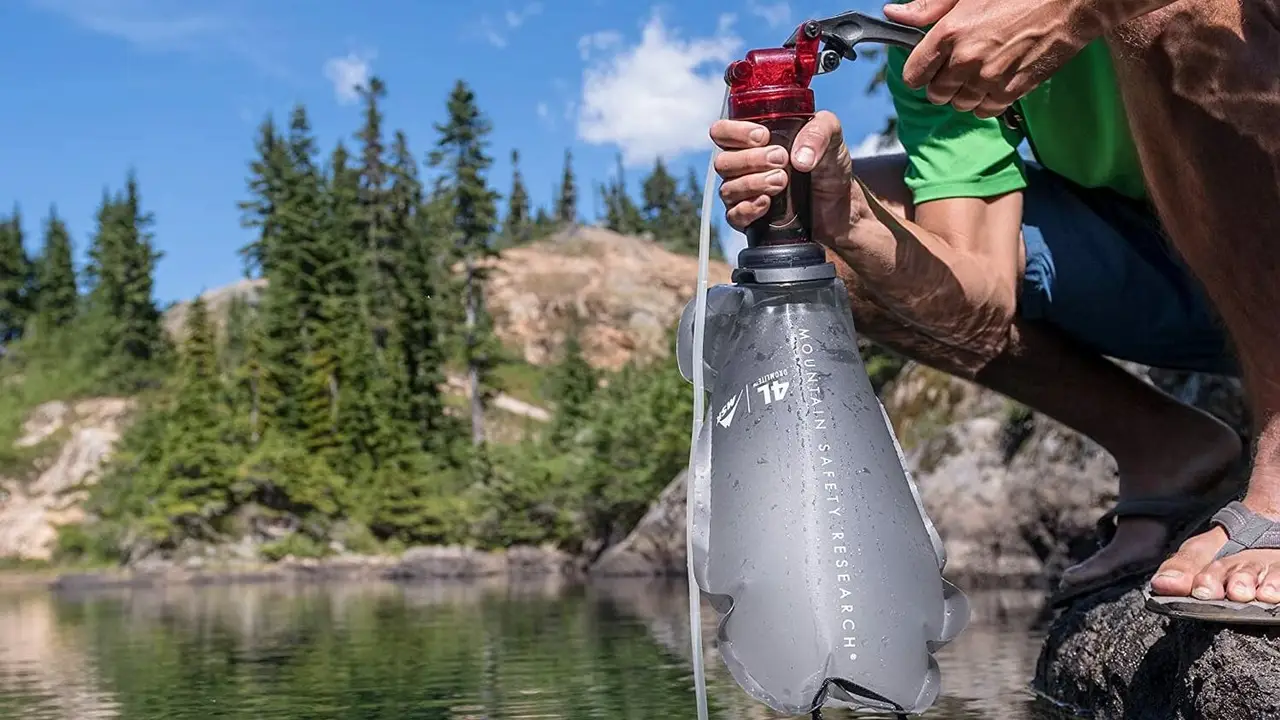
4. Platypus GravityWorks Filter System: The Group Hydration Solution
Product Overview: For groups or basecamp scenarios, a gravity filter system like the Platypus GravityWorks is a game-changer. Instead of pumping or squeezing, gravity does all the work. You simply fill a dirty water reservoir, hang it higher than a clean water reservoir, and let gravity pull the water through the hollow fiber filter. It's efficient, hands-free, and can filter large volumes of water quickly.
Specific Features:
- Filtration Method: Hollow Fiber (0.2 micron)
- Removes: Bacteria, Protozoa, Particulates.
- Flow Rate: Up to 1.75 liters per minute (4-liter system).
- Lifespan: Up to 1,500 liters (396 gallons).
- Weight: Approximately 11.5 ounces (325g) for the 4-liter system.
- Ease of Use: Very easy, hands-free operation once set up. Backflushing is simple by reversing the flow.
- Capacity: Available in 2-liter and 4-liter versions, ideal for groups.
Use Cases: Perfect for group backpacking trips, family camping, or any situation where you need to filter a significant amount of water for multiple people without constant effort. Great for refilling cooking pots and multiple water bottles at once.
Pros: Hands-free operation, high volume filtration, good flow rate, relatively lightweight for its capacity, easy to use for groups.
Cons: Bulkier than personal filters. Requires two reservoirs (dirty and clean). Does not remove viruses or improve taste/odor. Susceptible to freezing damage.
Price Range: $100 - $130 USD
5. Lifestraw Personal Water Filter: The Emergency Go-To
Product Overview: The Lifestraw is perhaps the most iconic personal water filter, known for its simplicity and effectiveness. It's a straw-style filter that allows you to drink directly from a water source. It uses hollow fiber membrane technology to remove bacteria and protozoa. While it's not designed for filtering large volumes for cooking or refilling bottles, it's an excellent emergency backup or a minimalist option for day hikes.
Specific Features:
- Filtration Method: Hollow Fiber (0.2 micron)
- Removes: Bacteria, Protozoa.
- Flow Rate: Moderate, depends on suction.
- Lifespan: Up to 1,000 gallons (4,000 liters).
- Weight: Approximately 2 ounces (57g).
- Ease of Use: Extremely simple. Just uncap and drink directly from the source.
- Portability: Very compact and lightweight, fits easily in a pocket.
Use Cases: Excellent for emergency kits, minimalist day hikes, or as a backup filter. It's a great option for situations where you just need a quick drink directly from a stream or puddle.
Pros: Extremely lightweight and portable, very affordable, long lifespan, simple to use.
Cons: Cannot collect water for later use or for cooking. Does not remove viruses or improve taste/odor. Requires direct access to the water source. Can be awkward to use in shallow water.
Price Range: $15 - $25 USD
Comparing the Best Portable Water Filters: A Quick Glance
To help you make a decision, here's a quick comparison table of our top picks:| Filter Model | Type | Removes | Flow Rate (Approx.) | Lifespan (Approx.) | Weight (Approx.) | Price Range (USD) | Best For |
|---|---|---|---|---|---|---|---|
| Sawyer Squeeze | Squeeze/Inline | Bacteria, Protozoa | Excellent | 100,000 gallons | 3 oz | $25 - $35 | Ultralight backpacking, versatile personal use |
| Katadyn BeFree | Squeeze | Bacteria, Protozoa | 2 L/min | 1,000 liters | 2.3 oz | $35 - $45 | Fast-and-light hiking, trail running |
| MSR Guardian | Pump | Viruses, Bacteria, Protozoa | 2.5 L/min | 10,000 liters | 1 lb 1.3 oz | $250 - $300 | International travel, virus protection, groups |
| Platypus GravityWorks | Gravity | Bacteria, Protozoa | 1.75 L/min | 1,500 liters | 11.5 oz | $100 - $130 | Group camping, basecamp, high volume needs |
| Lifestraw Personal | Straw | Bacteria, Protozoa | Moderate | 1,000 gallons | 2 oz | $15 - $25 | Emergency backup, minimalist day hikes |
:max_bytes(150000):strip_icc()/277019-baked-pork-chops-with-cream-of-mushroom-soup-DDMFS-beauty-4x3-BG-7505-5762b731cf30447d9cbbbbbf387beafa.jpg)